Guides · 5 min read
Eyebrow Micropigmentation: What It Is, How It Differs from Microblading and What to Know First
By Marta Fernández · Updated
Eyebrow micropigmentation promises something very specific: waking up with your brows defined and looking natural. When it’s done well, it delivers. But it’s a technique that leaves pigment in your skin, so it’s worth properly understanding what it is, how it differs from microblading, how it heals and when it isn’t a good idea before you book.
What eyebrow micropigmentation is
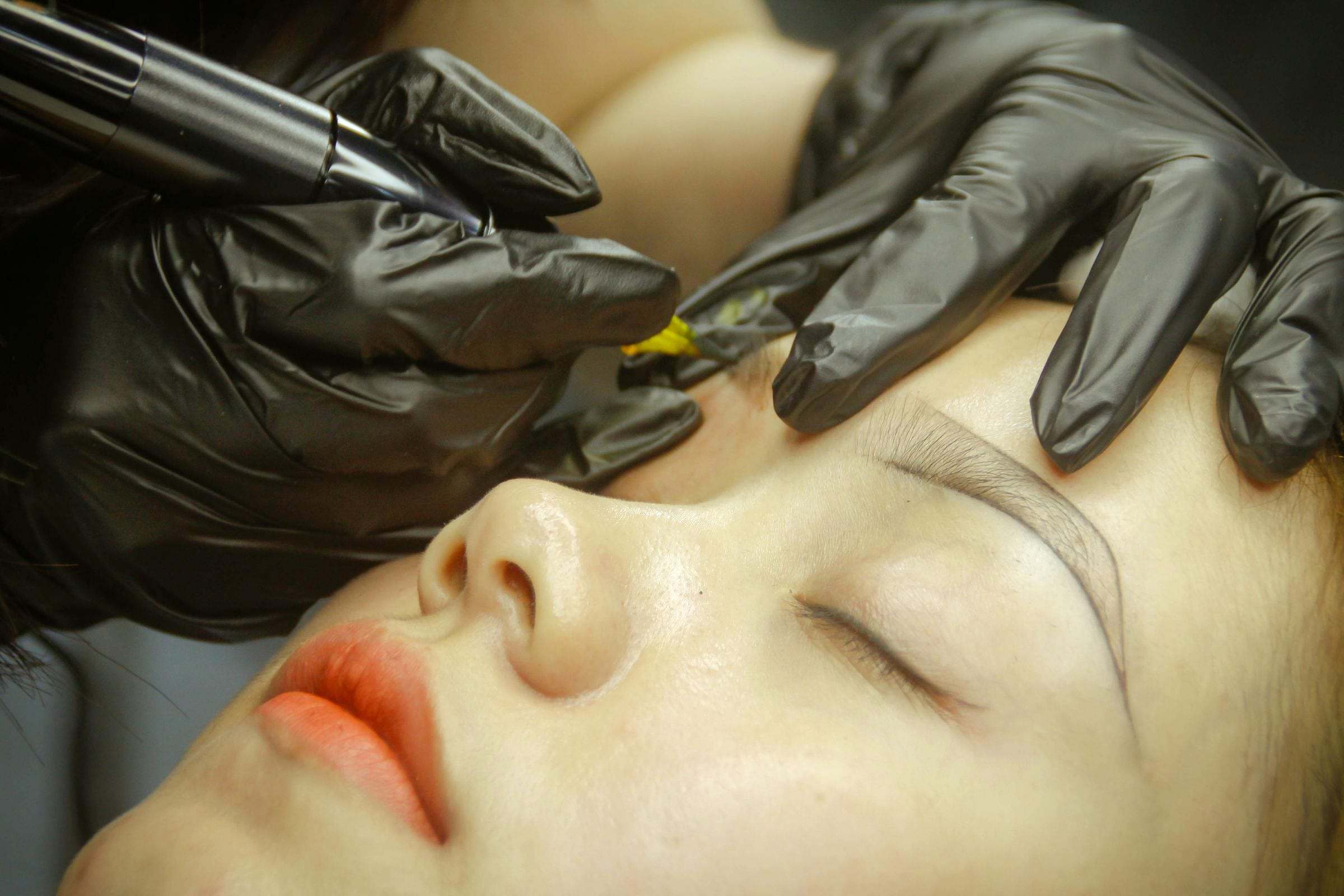
Micropigmentation is a semi-permanent beauty technique that deposits pigment in the superficial layer of the skin. For the brows, it’s done with a micropigmentation device, known as a dermograph: a small electric instrument with a fine, single-use needle cartridge that introduces the pigment in a controlled way.
It differs from a tattoo in that it works at a shallower depth, with pigments designed to fade over time. And because the device allows precise control, the same technique can produce different effects:
- Hair-stroke effect, with fine lines that mimic individual brow hairs, for a very natural look.
- Soft shading, a powdery finish that fills and defines the brow, like a light pencil.
- A combination of both, with strokes at the start of the brow and shading towards the tail.
Which one suits you isn’t decided in advance: it’s chosen at the assessment, according to your natural brows and the look you want.
Micropigmentation and microblading: what’s the difference?
You’ll often hear both terms used as if they were the same thing, but they’re not. Both are semi-permanent and both deposit pigment in the skin. The difference lies in the tool:
- Microblading uses a manual blade made up of a row of very fine needles. The professional draws small cuts by hand, stroke by stroke, to imitate hairs.
- Micropigmentation uses an electric device. It allows more control over depth and rhythm, and makes it possible to create hair strokes, shading or a combination.
The effect, hair strokes, shading or both, is chosen at the assessment according to your brows and the look you want. At Narumi we do eyebrow micropigmentation, not microblading.
How long it lasts: why there’s no fixed figure
It’s the question everyone asks, and the honest answer is that it varies. The pigment fades progressively rather than disappearing overnight, and the pace depends on each person. Some factors make it fade sooner:
- Sun, which is what speeds up fading the most.
- Acids, retinol and peels used on or near the brows.
- Skipping the touch-up, which sets the result and makes it more even.
- Swimming pools, saunas and heavy sweating while healing.
When the colour softens, you can choose a maintenance touch-up or simply let it fade.
The design: the part you don’t see that decides everything
Flawless technique on a poor design gives you brows that don’t flatter you. That’s why the personalised design is the most important stage. It takes into account your bone structure, the distance between your eyes, eyelid height, face shape and expression. From there, we mark where the brow starts, where the arch peaks and where it ends.
The brow is drawn in pencil first, and pigmenting doesn’t begin until you’re happy with what you see in the mirror. Be wary of anywhere that uses one-size-fits-all stencils or doesn’t take time over this stage.
Choosing the pigment shade
Pigment doesn’t look the same in the skin as it does in the bottle. It sits beneath a layer of skin that filters the colour, and over time its components fade at different rates. If it’s chosen badly, brows can turn grey, blue or reddish as they fade.
To avoid this, your hair and brow colour are taken into account, but above all your skin’s undertone, whether warm, cool or neutral. The shade is adjusted so it fades towards a natural colour.
What the treatment involves
- Assessment and consent. We go over your health, your skin and your expectations, choose the technique that suits you and you sign an informed consent form.
- Personalised design in pencil, adjusted together with you.
- Choice of pigment shade to suit your undertone and hair colour.
- Pigmentation with the device, using single-use needle cartridges.
- Aftercare instructions and a date for your touch-up session.
Most people describe the sensation as mild discomfort, like tiny scratches.
Healing, step by step
Every skin heals at its own pace, but the process usually follows these stages:
- First few days. Your brows look darker and more intense than they will end up. There may be some redness.
- Flaking phase. The skin sheds fine scales and the colour seems to disappear in places. Don’t scratch or pick at anything.
- Settled colour. Once the skin has finished renewing, the pigment becomes visible again with its true tone.
- Touch-up. This is when the result is evened out and adjusted.
While the skin heals, avoid direct sun, swimming pools, saunas, heavy sweating and makeup on your brows, and follow the aftercare instructions you’re given to the letter.
Who shouldn’t have it
Micropigmentation breaks the surface of the skin and deposits pigment, so there are situations in which it shouldn’t be carried out, or where a doctor’s go-ahead is needed:
- Pregnancy and breastfeeding.
- A tendency to keloid scars or healing problems.
- Anticoagulant medication or clotting disorders.
- Recent oral isotretinoin.
- Uncontrolled diabetes, cancer treatment or conditions affecting the immune system.
- Dermatitis, psoriasis, cold sores or wounds in the area.
- Known allergy to pigments or anaesthetics.
In these cases, check with your doctor or dermatologist before considering it. A reputable salon won’t go ahead without that approval.
What to ask before choosing where to have it done
- Is the salon authorised for micropigmentation, and is the person doing it properly trained?
- Are the materials single-use and opened in front of you?
- Do they take time over the design and let you see it before starting?
- Do they explain how they’ll choose the pigment shade and the technique?
- Is the touch-up planned from the outset?
- Have they told you what it can’t achieve in your case?
At Narumi
At our beauty salon in Málaga city centre, we offer eyebrow micropigmentation with a micropigmentation device. The salon is authorised for micropigmentation, and every treatment starts with an assessment and a brow design based on your facial features. We adapt the technique to you, whether hair strokes or soft shading, and we don’t begin pigmenting until you’re happy with the design. The touch-up session is part of the treatment. You’ll find the process, aftercare and contraindications on our eyebrow micropigmentation in Málaga page.
If you’d like to complete the look, you can combine it with a lash lift and tint, planning the timing so it doesn’t clash with the healing period.
| Micropigmentation | Microblading | Brow tint | |
|---|---|---|---|
| How it's done | With a micropigmentation device (dermograph) | By hand, with a blade of fine needles | Colours your existing brow hairs |
| Possible effects | Hair strokes or soft shading, adapted to each person | Hair-like strokes only | More visible brows, without filling gaps |
| Pigment in the skin | Yes, semi-permanent; fades gradually | Yes, semi-permanent; fades gradually | No, only the hair is tinted |
| At Narumi | Yes | No | Ask us |
Frequently asked questions
What is eyebrow micropigmentation?
It's a semi-permanent beauty technique that places pigment in the superficial layer of the skin with a micropigmentation device, called a dermograph. It's used to define, fill or reshape the brows. Depending on your brows and the look you want, the technique can create a hair-stroke effect or a soft shading, and it always starts with a design adapted to your face.
What's the difference between micropigmentation and microblading?
Both are semi-permanent and deposit pigment in the skin. The main difference is the tool: microblading uses a manual blade made of fine needles to cut small strokes by hand, whereas micropigmentation uses an electric device. The device allows more control over depth and makes it possible to create both hair strokes and shading. At Narumi we work with micropigmentation, not microblading.
Is eyebrow micropigmentation permanent?
No. It's semi-permanent: the pigment fades progressively over time. How quickly it fades varies from person to person, depending on your skin, sun exposure, the products you use and how well you follow the aftercare. When the colour softens, you can have a maintenance touch-up or let it fade gradually.
Why is a touch-up session needed?
Because each part of the brow holds pigment differently while it heals. Once the skin has fully renewed, the touch-up evens out the result, adjusts the intensity and refines details. It's part of the treatment from the start, and skipping it usually leaves a less even finish.
How does healing work?
In general terms, the brows look darker for the first few days, then the skin flakes finely and the colour can seem to fade in places. Once the skin has finished renewing, the settled colour shows, and that's when the touch-up is done. The professional who looks after you will give you specific aftercare instructions.
Where can I get eyebrow micropigmentation in Málaga?
At Narumi, a beauty salon at Calle Cristo de la Epidemia 33, in Málaga city centre. The salon is authorised for micropigmentation, and every treatment starts with an assessment and a personalised brow design. We don't begin pigmenting until you're happy with the design.