Guides · 5 min read
Radiofrequency Facials: What They Can and Can't Do for Your Skin
By Marta Fernández · Updated
A radiofrequency facial is one of the most sought-after beauty treatments for firmness, and also one of the most surrounded by exaggerated claims. This guide explains how it works, what results are reasonable and when you’d be better off looking elsewhere.
How radiofrequency works
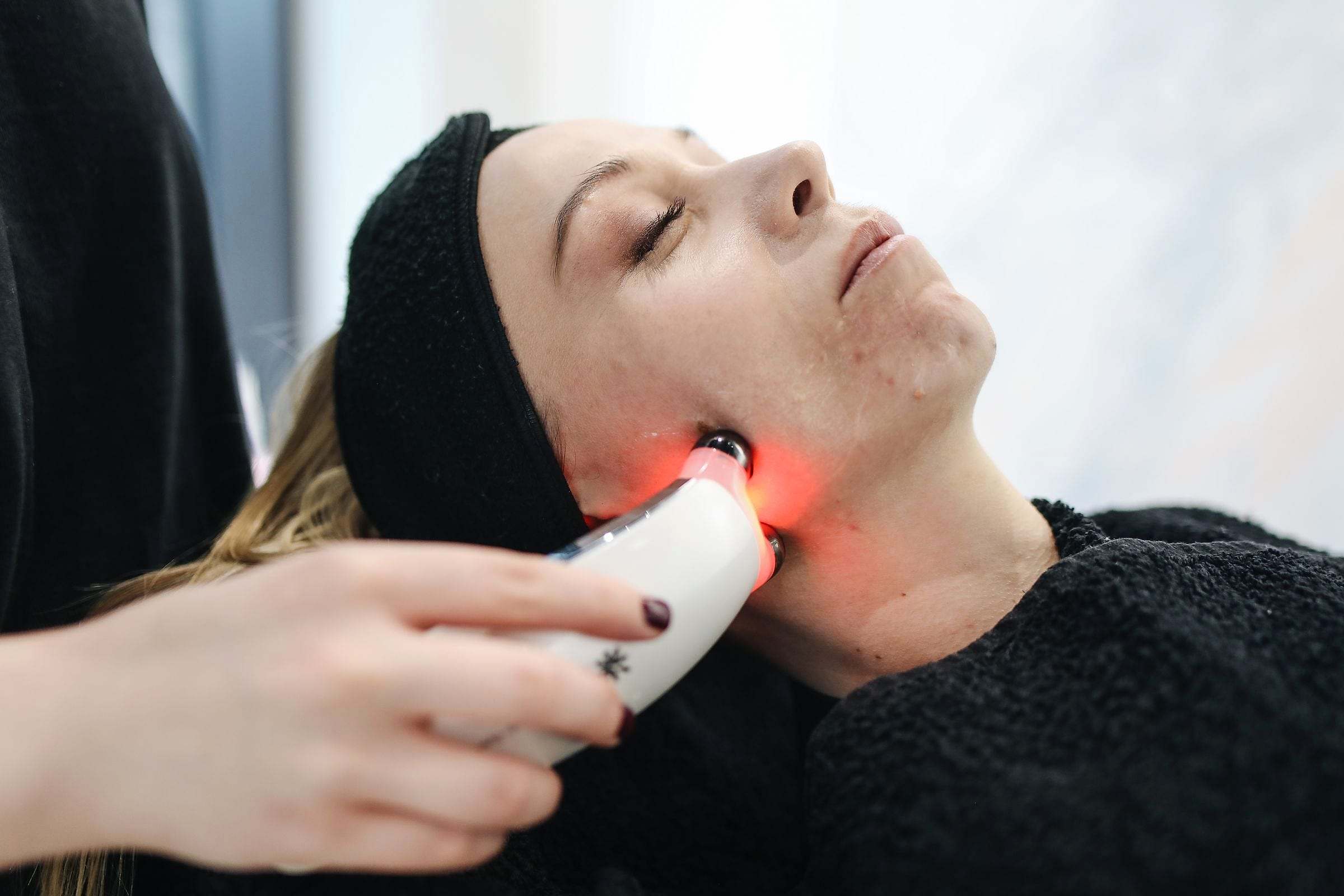
Radiofrequency is a form of electromagnetic energy. As it passes through the skin, the tissues resist it and that energy turns into heat. In beauty treatments it’s applied with a handpiece that glides over the skin, with a gel or cream that helps the current pass through, and it’s kept constantly moving to spread the warmth.
That warmth reaches below the surface. The idea is to keep the skin warm for long enough for the heat to support its natural firming response and the renewal of its structure. It isn’t an instant effect: the change we’re after builds up session by session.
There are different types of device (monopolar, bipolar, multipolar), which differ in how the current flows and how deep the warmth reaches. For you, what matters in practice is that your therapist knows how to adjust the intensity to each area and that the protocol is consistent.
What it can do
With a well-planned course and skin showing early or mild sagging, you can expect:
- Smoother skin that feels tighter to the touch.
- Better texture and a more even look.
- A firmer look along the jawline, cheeks and neck.
- Fine expression lines looking somewhat softer.
- A radiance you’ll notice from the very first session, partly thanks to the warmth and hydration.
These changes are gradual and vary from person to person. To judge them honestly, the most reliable approach is to compare a photo taken before you start with one at the end of the course, in the same light.
What it can’t do
Here’s the part many adverts leave out:
- It doesn’t lift sagging tissue. If there’s excess skin or marked drooping, cosmetic radiofrequency won’t fix it.
- It doesn’t fill. Deep folds and volume loss are the territory of medical aesthetics.
- It doesn’t erase deep static wrinkles, the ones you can see when your face is at rest.
- It doesn’t reduce facial fat or a double chin.
- It isn’t a substitute for surgery. Calling it a “non-surgical facelift” creates expectations it can’t meet.
Radiofrequency, HIFU and facelifts: not the same thing
They’re easy to confuse because they all talk about firmness. Cosmetic radiofrequency spreads warmth superficially and gradually, over several sessions and with no downtime. HIFU focuses ultrasound on points at a greater depth, is usually carried out in medical settings and can be more uncomfortable. A facelift is surgery that repositions tissue and removes excess skin. Each has its place, and the table on this page sums up the differences. If you’re unsure about beauty treatments versus medical aesthetics, we have a dedicated guide on beauty salons and medical aesthetics.
What a session feels like
A radiofrequency facial is nothing like an aggressive treatment. After cleansing your skin and applying the conductive product, the handpiece starts moving over your face and you feel a warmth that builds gradually, like a hot-stone massage. Over bony areas such as the jaw, forehead or cheekbones, the warmth feels more intense, and that’s where your therapist lowers the power or speeds up the movement. Afterwards, your skin usually stays slightly pink and warm for a while, and you can carry on with your day as normal.
The lack of downtime is one of its advantages, but there’s a trade-off: because the skin isn’t being stressed, the result depends on consistency. A single session leaves you looking fresh; a course is what makes the real difference.
What it combines well with
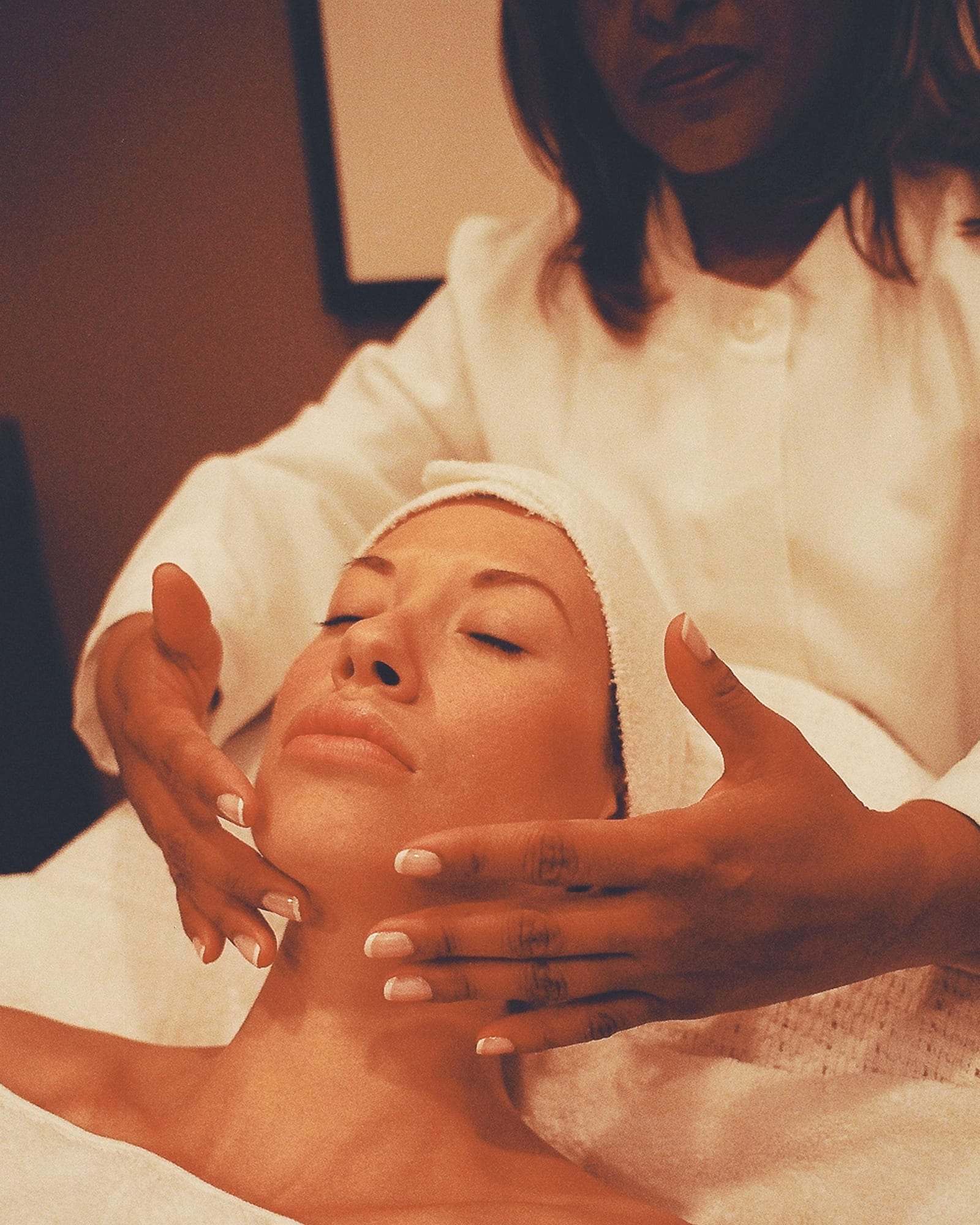
Radiofrequency sits well alongside hands-on techniques such as a facial massage, and with eye contour care. Treatments that irritate the surface, such as a chemical peel or microneedling, are spaced out so they don’t fall on the same day. If you combine several, do it as part of a plan rather than piling up sessions at random.
How many sessions and how often
A typical course is 6 to 10 sessions, every 7 to 15 days, followed by regular maintenance. The reason is simple: the skin needs time between sessions and the effect builds cumulatively. Having two sessions back to back or turning the intensity right up won’t speed up the result, and it will make it more uncomfortable.
Who it isn’t for
Radiofrequency isn’t carried out in the following cases:
- Pacemakers, defibrillators or other implanted electronic devices.
- Pregnancy and breastfeeding.
- Metal implants or prostheses in the area.
- Recent fillers or threads, until the doctor who carried them out gives the go-ahead.
- Irritated skin, wounds, sunburn or an active cold sore.
- Altered skin sensation, cancer under treatment or active autoimmune conditions, unless your doctor has given the go-ahead.
How to tell if it’s right for you
Ask yourself three questions. Is your concern smoothness and firmness, rather than volume or excess skin? Can you commit to a course of sessions? Are you happy with a gradual, natural result rather than a dramatic change? If the answer is yes, radiofrequency is a sensible option. If not, it’s worth looking at other techniques or seeking a medical assessment.
What you do at home counts, too. Radiofrequency gives its best on skin that’s well hydrated and protected from the sun every day. If you smoke or spend a lot of time in the sun unprotected, the result will be more modest, because those habits weigh more heavily than any device.
At Narumi
At Narumi, in Málaga city centre, our radiofrequency facial is called Biolifting. Marta Fernández carries out an initial assessment, checks for contraindications and tells you frankly whether your case calls for beauty treatments or medical aesthetics. If you’d prefer a more complete session, with a peel, massage and cold, the Bellaction Duo facial is the alternative; and if you’re after relaxation and radiance without devices, there’s Kobido. To see all the options side by side, read our guide on facial sagging and non-invasive options.
| Cosmetic radiofrequency | HIFU (high-intensity focused ultrasound) | Surgical facelift | |
|---|---|---|---|
| Where it's done | Beauty salon | Usually in a medical setting | Operating theatre |
| How it works | Evenly spread, gradual warmth | Heat focused on points at a greater depth | Surgery: repositions tissue and removes skin |
| Sessions | A course of 6–10, then maintenance | A few widely spaced sessions | A single operation |
| Recovery | None | Variable | Weeks |
| Degree of sagging | Early or mild | Mild to moderate, depending on a medical assessment | Moderate to marked |
Frequently asked questions
Does a radiofrequency facial really work?
It works within certain limits. Done properly and consistently, it improves smoothness and the look of firmness in skin with early or mild sagging. It doesn't work like a facelift or deliver dramatic results in one session. Anyone promising that is selling you expectations, not a treatment.
What age does it make sense from?
There's no fixed minimum age. It makes most sense when you start to notice your skin losing its bounce, which tends to happen from your mid-thirties onwards, and as maintenance after that. Your skin's starting point matters more than your age.
How long do the effects of radiofrequency last?
The smooth look straight after a session lasts a few days. What you achieve with a course holds up better if you have maintenance sessions every so often, because skin ageing carries on regardless. How long it lasts varies with each person and their habits.
Can radiofrequency burn?
If it's done badly, yes. That's why the handpiece has to keep moving, the temperature rises gradually and the therapist asks how it feels. An intense heat that doesn't ease off is the signal to adjust, not to grin and bear it.
Does it make your face fuller or slimmer?
Neither. A radiofrequency facial doesn't reduce facial fat or a double chin; its aim is the look of firmness and the texture of your skin.