Guides · 5 min read
Dermapen or chemical peel: which is right for your skin?
By Marta Fernández · Updated
Dermapen and chemical peels come up together in almost every search about texture, pores and pigmentation, and that’s no coincidence: both renew the skin. But they take different routes to get there and they aren’t equally good at everything. Here’s how they work, what each skin type can expect, and how to decide without getting lost in the marketing.
The difference in a nutshell
A superficial chemical peel uses acids to loosen the bonds between the outermost skin cells so they shed sooner. It works on the surface, evenly. Dermapen uses a micro-needle device to create superficial micro-channels spread across the skin; these help cosmetic actives absorb and prompt the skin’s natural renewal. It works at scattered points, slightly below the surface, always within what’s appropriate for a beauty and aesthetics centre.
Neither is better in the abstract. One is more effective for some concerns, the other for others.
What’s bothering you: the deciding factor
If your skin looks dull or your tone is uneven
Skin that lacks glow, light superficial sun spots, darker areas around the mouth or forehead, a tone that never quite looks even: this is where a chemical peel usually fits best. By renewing the outer layer evenly, it helps skin reflect light better, and over a course of sessions your tone looks more balanced.
One important point: if a mark has changed shape, colour or size, or you suspect melasma, see your dermatologist before having any beauty treatment.
If texture, pores or marks are your concern
Thickened skin, visible pores on the cheeks and nose, small irregularities left by old spots: here Dermapen usually has more to offer. The micro-channels stimulate the skin at a superficial depth and, session by session, texture looks finer and pores less noticeable. Marks improve slowly and need consistency.
If you’re prone to breakouts
If you’re blemish-prone but not mid-breakout, a well-chosen peel helps keep pores clear. Dermapen isn’t done over active spots. And if you have inflamed acne with painful lesions or cysts, neither one: see your dermatologist first.
What the session and the following days are like
The experience is quite different, and for many people that’s what tips the balance.
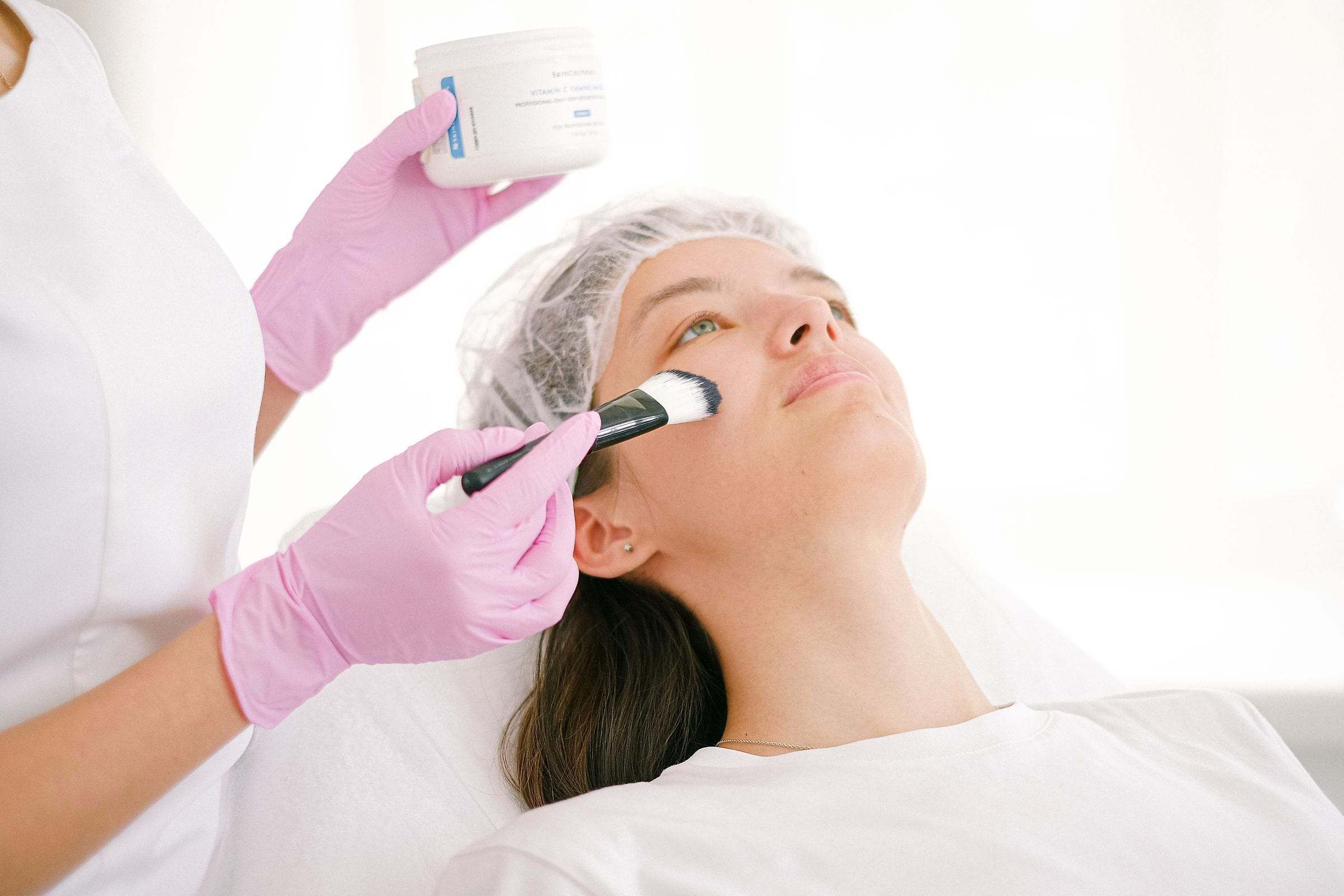
Chemical peel. After cleansing and degreasing, the product is applied in thin layers. For a few minutes you’ll feel tingling or warmth, especially around the sides of the nose and the chin. It’s then removed or neutralised and the skin is soothed. You may be a little red that day. Between the second and fifth day, fine flaking, like dry skin, may appear; don’t pick at it. Some superficial peels barely show afterwards, others flake a bit more; it’s no sign that they work better or worse.
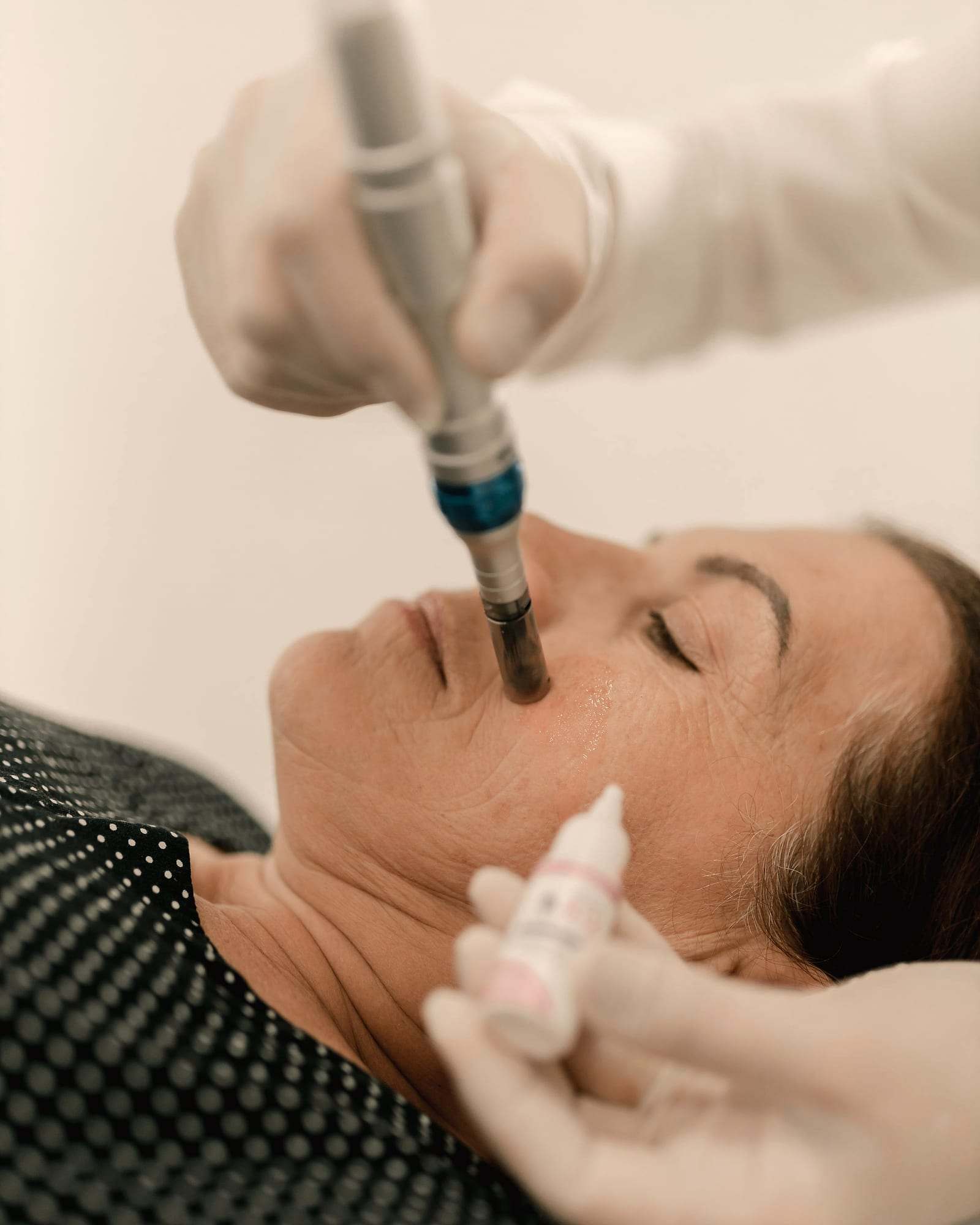
Dermapen. After cleansing and disinfecting, the device is glided over the skin section by section along with a serum. You’ll feel fine pricking and vibration, stronger over bone. Afterwards your skin will be pink and warm, as if you’d caught a little sun. The redness usually lasts 24–48 hours, after which your skin may feel slightly rough for a few days.
In both cases your skin is more sensitive to the sun. In a city with Málaga’s light, daily sun protection matters as much as the session itself.
How many sessions, and how often
Neither technique gives its best result in a single session.
- Superficial chemical peel: a course of 4 sessions, 2 to 4 weeks apart, is the usual plan. After that, a few sessions a year to maintain.
- Dermapen: between 3 and 6 sessions, 4–6 weeks apart. The longer gap is because the skin needs more time to respond between sessions.
These figures are a guide. The real number depends on your skin, your goal and how you respond.
When to have neither
There are situations where we wait or refer you elsewhere, whichever technique you choose:
- Pregnancy or breastfeeding.
- An active cold sore, broken skin, dermatitis or flaring rosacea.
- Isotretinoin in recent months.
- A recent tan or strong sun exposure coming up.
- Moles or marks that have changed: see your dermatologist first.
For Dermapen, add a tendency to keloid scarring and clotting problems; in those cases, check with your doctor.
What about combining them?
Often the answer isn’t to choose but to put them in order. A typical plan starts with a deep cleansing facial to prep the skin, moves on to a peel to resurface and even out tone, and finishes with Dermapen to work on texture and pores. Always in separate sessions, respecting the intervals. That’s the thinking behind Narumi’s Pack 2.
What doesn’t make sense is piling techniques into one day or shortening the intervals to speed things up: skin needs time to respond, and pushing it usually just means irritation.
Decide in three questions
- What do you see in the mirror? If it’s tone and radiance, a peel. If it’s texture, pores or marks, Dermapen.
- How much time do you have? If you can’t spend two days with a pink face, start with the peel or another gentler option.
- How much sun are you going to get? If you’ve got beach days coming up, wait. If it’s autumn or winter, it’s a good time for either.
If you’re still unsure after that, an assessment in the treatment room usually settles it: seeing and feeling your skin in good light tells us more than any comparison.
At Narumi
At Narumi, on Calle Cristo de la Epidemia in Málaga city centre, Marta Fernández, an advanced aesthetics specialist, assesses your skin before suggesting either technique, and tells you plainly if one of them isn’t right for you. We work only at a cosmetic level: superficial peels and superficial microneedling with cosmetic actives, with no injectables.
- Dermapen in Málaga: cosmetic microneedling for texture, pores and superficial marks.
- Chemical peel in Málaga: superficial resurfacing for tone and radiance.
- Deep cleansing facial: the starting point for our facial packs.
If you’ve settled on a peel, it’s worth reading our guide to skin care before and after a chemical peel; if you’re leaning towards Dermapen, see Dermapen sessions and aftercare.
| Dermapen | Superficial chemical peel | |
|---|---|---|
| How it works | Superficial micro-channels with micro-needles, plus cosmetic actives | Acids that loosen the bonds between cells in the outer layer |
| Best for | Texture, pores, superficial marks | Uneven tone, dullness, congested pores |
| How it feels | Fine pricking and vibration | Brief tingling or warmth |
| How skin looks afterwards | Pink for 24–48 h | Slight redness; possible light flaking for several days |
| Typical course | 3–6, every 4–6 weeks | Course of 4, every 2–4 weeks |
| Sun | Avoid direct sun for the first week | Strict sun protection throughout the course |
Frequently asked questions
Which is stronger, Dermapen or a chemical peel?
They can't really be ranked that way, because they work differently. A peel acts evenly across the whole surface; Dermapen works through micro-channels spread over the skin. In a beauty centre, both are carried out at a superficial level. What changes is what each one does best and how your skin looks in the days that follow.
Can I have Dermapen and a peel on the same day?
We don't recommend it. Doing both in one session irritates the skin without improving the result. The usual approach is to leave at least two or three weeks between them and alternate them within a plan, such as Narumi's Pack 2, which includes a deep cleansing facial, a peel and Dermapen in separate sessions.
Which is better for acne marks?
For marks with some texture or unevenness, Dermapen tends to be more useful. For the reddish mark or uneven tone a spot leaves behind, a superficial peel helps even things out. Neither works on deep scars, which call for medical techniques. If you have active inflamed acne, see your dermatologist first.
Which has less downtime?
It depends on your skin, but Dermapen leaves your face pink for a day or two, while a peel may not show at all or may cause fine flaking for several days. Before an event, avoid both in the days just beforehand: leave at least a week.
Which is better in summer in Málaga?
Neither is ideal in high summer. If you can't wait, we can consider it with very strict sun protection and no beach for the following days, but the sensible plan is to schedule the course between autumn and spring. In summer there are gentler options, such as the hydrotherapy facial.